
Class-I vs Class-II PWD Contractors in Tamil Nadu: What's the Difference
The difference between Class-I and Class-II PWD contractors in Tamil Nadu comes down to the tender value ceiling each class is permitted to bid on, which in turn reflects a real difference in financial capacity and machinery holding required to register at each level. Class-I sits at the top of the PWD contractor classification system with no upper ceiling on tender value, while Class-II and the classes below it are capped at progressively lower package sizes. This matters directly to anyone choosing a contractor, because hiring below the class a project actually needs is one of the most common and avoidable sources of risk on a public works contract.
1 · Tender Value Ceilings by PWD Contractor Class
Tamil Nadu PWD classifies registered contractors into a tiered system, with Class-I at the top permitted to bid on tenders without the value ceiling that applies to lower classes, and Class-II, Class-III, and below restricted to progressively smaller package values set by the department. The exact ceiling figures are revised periodically by PWD circular, so the specific rupee value attached to each class at any given time should always be confirmed against the current departmental notification rather than assumed from an older reference.
What stays consistent across revisions is the underlying logic: a contractor's registered class is meant to be a proxy for their proven capacity to execute work of that scale reliably, not simply a paperwork tier. A Class-II contractor bidding informally on work that exceeds their ceiling, or executing it as an unregistered subcontractor beneath a Class-I name, sidesteps the actual purpose of the classification system, which is to match contract scale to demonstrated capability before public money is committed.
2 · Financial and Machinery Eligibility Differences Between Classes
Registration at each PWD class requires a contractor to demonstrate specific financial thresholds, annual turnover, net worth, and access to working capital, alongside a minimum machinery holding appropriate to the class. Class-I registration demands materially higher figures across all of these than Class-II, because a contractor bidding on larger, uncapped-value packages needs the balance sheet to absorb slower billing cycles and the machinery fleet to run multiple work fronts without depending entirely on rented equipment.
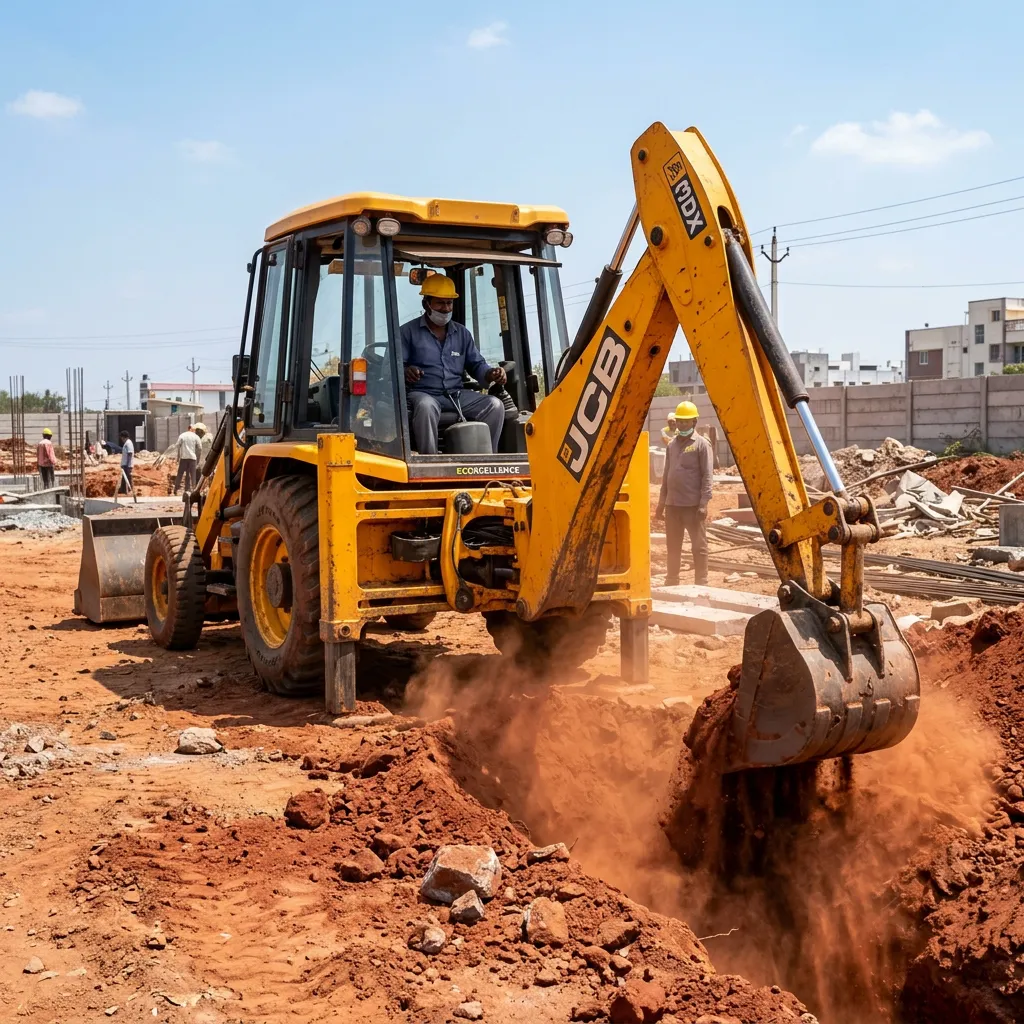
We hold Class-I registration and back it with a fleet of more than 85 owned machines, including hydraulic excavators, motor graders, and vibratory compactors, which is the kind of machinery depth the classification is designed to require at this tier. A Class-II contractor with a smaller fleet and lower turnover isn't necessarily a worse contractor for the scale of work their class is meant for, but that same profile becomes a genuine execution risk if stretched onto a package sized for Class-I capacity.
"Hiring below the class a project actually needs is one of the most common and avoidable sources of risk on a public works contract."
3 · Why Package Size Should Drive Which Class You Hire
The practical rule is straightforward: match the contractor's registered class to the actual value and complexity of the package, not to whichever contractor quotes the lowest price. A large road, site development, or demolition package that genuinely requires Class-I capacity, in terms of bank guarantee support, machinery deployment, and working capital resilience through PWD billing cycles, will expose a Class-II contractor's limitations under real project pressure even if their initial quote looked competitive.
Conversely, a smaller panchayat-scale package doesn't need Class-I overhead, and a well-run Class-II contractor sized correctly for that scope can execute it efficiently. The mismatch risk runs in both directions, but in our experience the more damaging and more common one is a client under-classing a large package to save on quoted rates, only to face slipped milestones or quality shortfalls once the contractor's actual capacity is tested against the project's real demands.
4 · Upgrading from Class-II to Class-I: What It Takes
Moving from Class-II to Class-I registration requires a contractor to demonstrate the higher financial thresholds and machinery holding that Class-I demands, typically supported by audited financial statements over several years showing sustained turnover growth, along with documented ownership of core machinery rather than rental arrangements. PWD reviews this against a track record of successfully completed contracts at the contractor's existing class, since the upgrade process is meant to verify genuine capacity growth rather than simply approve a paperwork submission.
The upgrade process also typically requires updated bank guarantee capacity and, depending on current departmental requirements, evidence of quality systems such as ISO certification that larger packages increasingly expect as standard rather than optional. Contractors considering this path should treat it as a multi-year capacity-building exercise, investing in machinery ownership and financial discipline ahead of the application, rather than an administrative form to file once turnover happens to cross a threshold.
5 · What This Means for Your Project Risk and Timeline
For anyone awarding or subcontracting PWD work, checking the contractor's current registered class against the package's actual estimated value is a five-minute verification step that materially reduces project risk, and it should happen before commercial negotiation, not after a contractor has already been informally selected on price. A mismatch here tends to surface as the same set of symptoms regardless of the specific project: slipped billing cycles as working capital gets stretched, machinery breakdowns from an undersized fleet running beyond its planned utilisation, and quality shortfalls where an under-resourced QA process can't keep pace with the volume of testing a larger package requires.
If you're specifically verifying a contractor's registration credentials rather than choosing between classes, our companion piece on what to verify in a PWD Class-I contractor registration covers the practical documentation checks in more depth. Getting the class-to-package match right at the award stage is consistently cheaper and faster than trying to correct it mid-contract through additional oversight or, in the worst case, a contractor default.
Operational Summary & Takeaways
Class-I and Class-II PWD contractor registrations exist to match project scale to demonstrated financial and machinery capacity, and verifying that match before award is one of the simplest risk controls available to anyone commissioning public works in Tamil Nadu. As a licensed PWD Class-I civil contractor and First Class NHAI road contractor with a fleet of over 85 owned machines, we execute uncapped-value packages across Coimbatore, Tiruppur, Erode, Salem, Pollachi, Karur, and the wider Kongu region. If you're weighing contractor class against an upcoming package, review our capabilities or contact us to discuss your project's scale.