
Emergency Excavation & Groundwater Management Services in Tamil Nadu
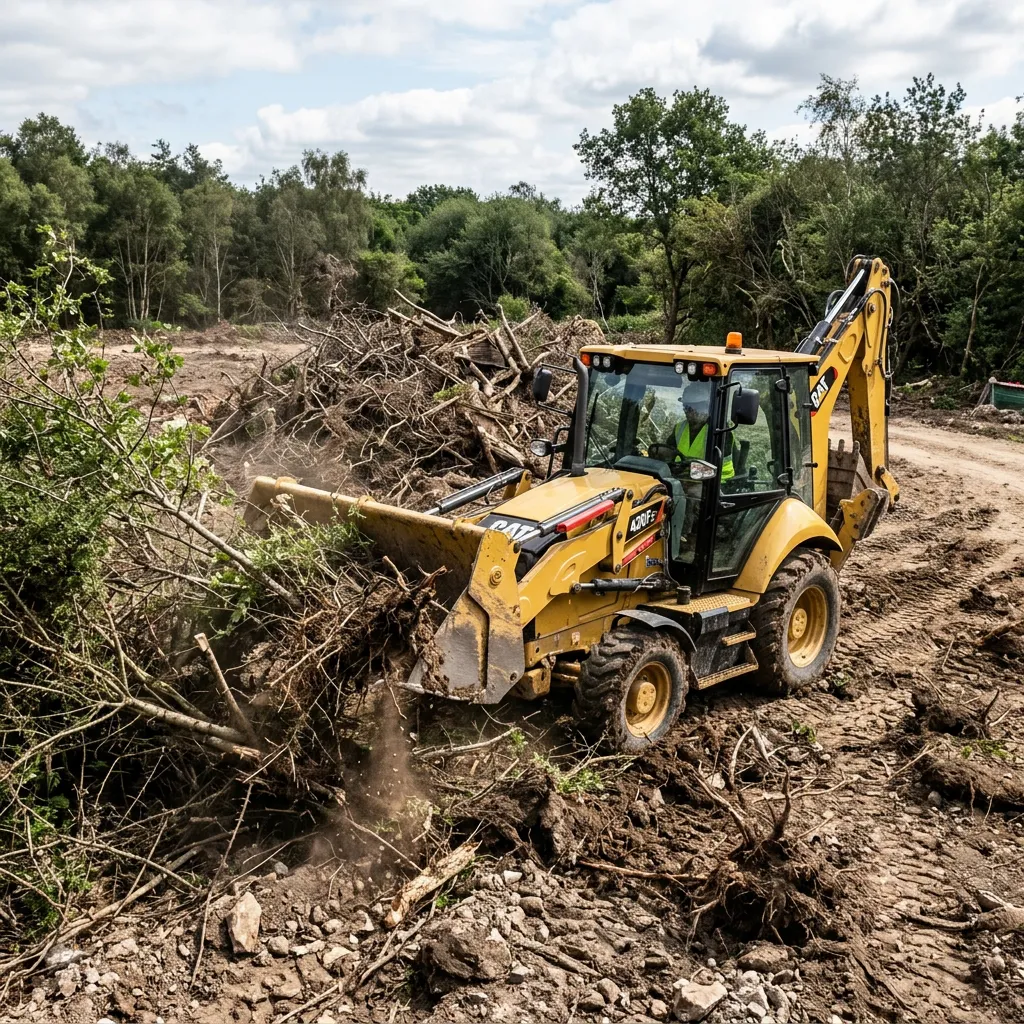
Emergency excavation and groundwater management services in Tamil Nadu mean mobilising a crew, pumps, and machinery to a distressed site within hours of a call, not the next working day. A collapsed trench wall, a sudden inflow flooding a basement dig, or a burst utility line beneath an active excavation don't wait for a normal procurement cycle, and our response protocol is built around that reality. This piece covers how we define, staff, and execute emergency callouts across our operating districts.
1 · What Counts as an Emergency Excavation Callout
We classify a callout as an emergency when a delay of even a few hours materially increases risk to workers, adjacent structures, or the viability of work already completed. That covers sudden groundwater inflow into an open basement or trench that threatens to submerge formwork or reinforcement before concrete is poured, a trench wall showing active cave-in signs with personnel still in the excavation zone, a burst water or sewer line intersecting a live dig, and slope failure on an embankment or cut face that's begun to move rather than merely showing hairline cracking.
What doesn't qualify as an emergency, even though it feels urgent to the site team at the time, is routine dewatering that a site's existing pump capacity can handle with closer monitoring, or scheduling pressure from a delayed subcontractor elsewhere on the programme. We ask a short set of triage questions on the initial call, whether anyone is in immediate danger, whether the situation is actively worsening, and whether the site's own equipment can hold the line until a scheduled visit, to route the call correctly rather than dispatching emergency resources for a problem that a planned response would handle just as well.
2 · Mobilising a Crew and Pumps Within Hours, Not Days
Rapid mobilisation depends on pre-positioned resources rather than starting from zero on every call. We keep a rotating standby fleet of backhoe loaders and excavators fuelled and staged at our Coimbatore yard specifically so a crew can move within the hour rather than waiting on machinery that's committed to another active site. Standby drivers and machine operators are on a rostered on-call rotation, and our dispatch coordinator has authority to redirect the nearest available crew to a genuine emergency without waiting for multi-level sign-off, since that approval delay is exactly what an emergency response protocol exists to eliminate.
For sites outside Coimbatore city, travel time is the real constraint, so our response time depends on distance: sites in Sulur, Kuniamuthur, and the immediate Coimbatore periphery typically see a crew on the ground fastest, while calls from Pollachi, Udumalpet, Karur, or the Nilgiris factor in longer road travel even when the crew mobilises immediately on receiving the call. We give callers an honest estimated arrival window at the point of dispatch rather than a generic promise, because a site manager deciding whether to also call in additional local resources needs an accurate number, not reassurance.
"A collapsed trench wall, a sudden inflow, or a burst utility line beneath an active excavation don't wait for a normal procurement cycle."
3 · Wellpoint and Submersible Pump Deployment for Sudden Flooding
For sudden groundwater inflow into a basement or deep excavation, our first response is submersible pump deployment directly into the flooding zone to hold water levels while we assess whether a more sustained wellpoint system is needed. We carry electric submersible pumps and diesel-powered self-priming centrifugal units ranging from 5 HP to 25 HP specifically so we can match pump capacity to inflow rate without over- or under-committing equipment on the first response.
Where inflow is sustained rather than a one-off surge, typically because the excavation has struck a genuine water table rather than surface runoff, we transition to a wellpoint system: a ring of vertical wellpoints driven around the excavation perimeter, connected to a common suction header under vacuum, drawing the local water table down below formation level. This is the same wellpoint methodology we use on planned deep excavations, deployed here under emergency time pressure rather than as a scheduled installation, and it's covered in more operational detail in our note on dealing with unexpected groundwater during excavation.
4 · Coordinating with Site Engineers Mid-Project During a Crisis
An emergency callout on a live project site means our crew is stepping into someone else's active programme, so the first action on arrival is a direct handover with the site's own engineer or supervisor rather than our crew making independent structural judgment calls about a foundation or excavation we didn't design. We need to understand what's already been poured or reinforced, what the original excavation design assumed about groundwater conditions, and what the client's own emergency protocol requires before we start pumping or re-excavating.
Once immediate danger is controlled, we hand back a clear written status, what was done, current water levels or slope condition, and what we recommend before work resumes, rather than simply packing up once the crisis visibly subsides. This matters because an emergency response that stabilises a site without documenting what was found can leave the site engineer unable to certify that it's safe to proceed, which just shifts the delay downstream instead of resolving it.
5 · Post-Emergency Assessment and Returning the Site to Programme
Once water levels are controlled and any immediate collapse risk is addressed, we carry out a structured post-emergency assessment: checking whether the excavation's side slopes or shoring still meet the original design safety factor, whether any poured concrete or reinforcement was compromised by the inflow, and whether the underlying cause, an unmapped utility line, an unexpectedly shallow water table, or a drainage failure elsewhere on site, needs a design change before work resumes rather than just a repeat of the same emergency next time it rains.
We leave standby pumping in place for a defined monitoring period after the initial emergency response where there's any risk of recurrence, rather than withdrawing all equipment the moment the immediate crisis is over, since a second inflow within days of the first is common when the underlying groundwater condition hasn't actually changed. Getting a site back to its original programme safely, not just quickly, is the actual measure of a successful emergency response.
Operational Summary & Takeaways
Emergency excavation and groundwater management across Tamil Nadu depends on pre-positioned machinery, an on-call crew roster, and a clear triage process that separates genuine emergencies from routine site pressure. As a licensed PWD Class-I civil contractor and First Class NHAI road contractor with more than 85 owned machines based in Coimbatore and reaching Tiruppur, Erode, Salem, Pollachi, Karur, and the wider Kongu region, we run this response capability alongside our planned excavation and trenching work. For emergency dispatch, call S Aswath directly at +91 80564 73519, or reach out to our office for planned excavation and dewatering needs.