
Foundation Contractor in Sulur: Building on Black Cotton Soil
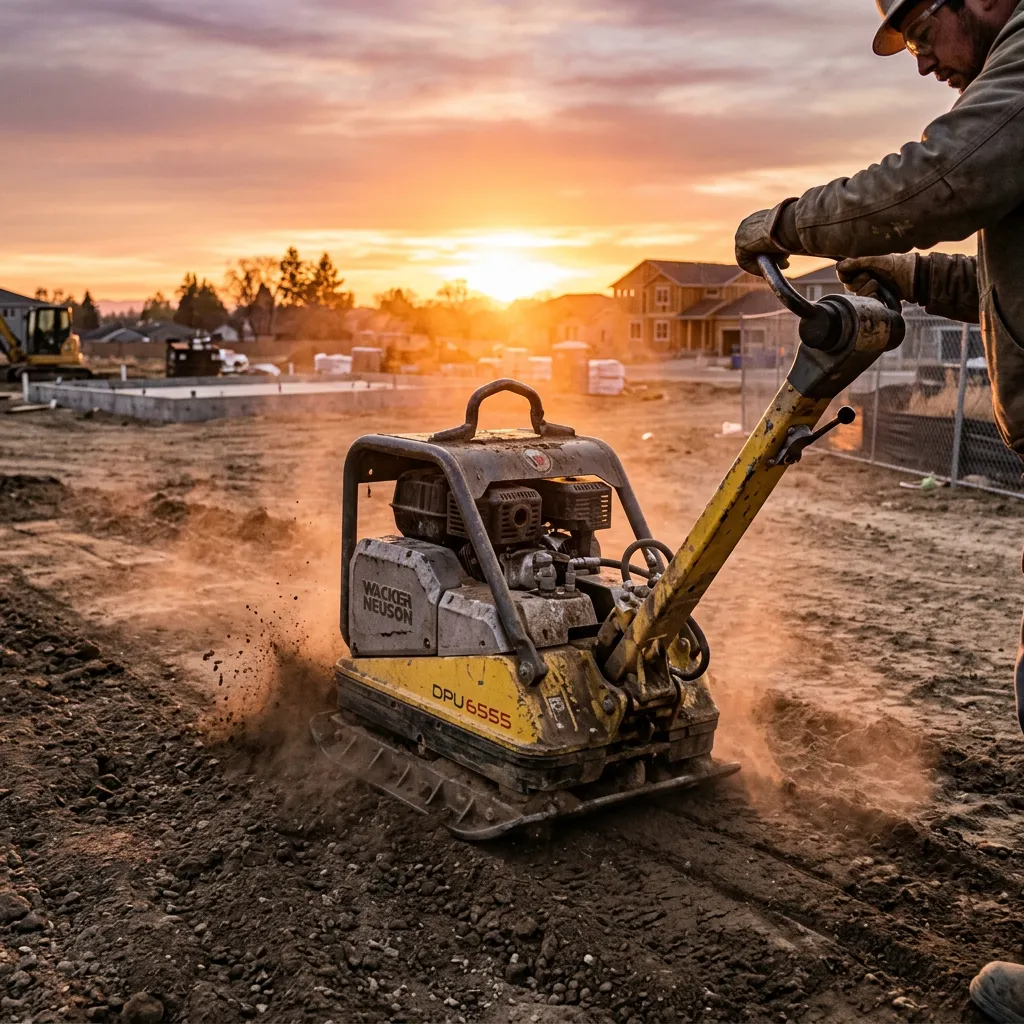
A foundation contractor in Sulur has to identify black cotton soil before the first footing is designed, because this expansive clay swells when it absorbs monsoon moisture and shrinks sharply in the dry months, generating heave forces that can crack an ordinary shallow footing within a few seasons. Pockets of black cotton soil are common across parts of the Sulur belt east of Coimbatore, often sitting beneath a thin, unremarkable-looking topsoil that gives no visual warning of the swelling clay underneath. We treat every foundation enquiry in this area as a soil investigation question first and a structural design question second, because the wrong assumption about soil behaviour here shows up as real, expensive distress in a finished building.
1 · Identifying Expansive Black Cotton Soil Before You Excavate
Black cotton soil is a montmorillonite-rich clay that gives itself away through a handful of field indicators before a single lab test comes back — deep shrinkage cracks across the ground surface in the dry season, a distinctive dark grey-to-black colour that stays consistent through the profile rather than fading with depth, and a sticky, high-plasticity feel when the soil is worked wet between the fingers. We start every Sulur foundation enquiry with test pits or bore holes taken to at least 1.5-2 times the anticipated footing width below founding level, since expansive behaviour can extend well past what a shallow trial pit alone would reveal, and we send representative samples for Atterberg limit testing, since a liquid limit above roughly 50% and a plasticity index above 25% are the standard lab indicators IS 1498 uses to classify a soil as highly expansive.
The free swell index test is the single most useful field-to-lab indicator we rely on for a quick go/no-go read on a plot, measuring how much a dry soil sample expands in volume once submerged in water relative to kerosene — a free swell index above 50% flags the soil as expansive enough that standard shallow foundation assumptions no longer apply. We run this test across multiple points on any plot larger than a single residential footprint, because black cotton soil in the Sulur area rarely presents uniformly; a plot can have a genuinely problematic swelling clay pocket in one corner and comparatively stable ground twenty metres away, and design decisions need to reflect that variation rather than a single average reading.
2 · Lime Stabilization vs Soil Replacement: Choosing the Right Fix
Once a plot's black cotton soil is confirmed and quantified, we weigh two practical remediation paths against each other rather than defaulting to one: lime stabilization, where hydrated lime is mixed into the clay at a dosage typically in the 3-6% range by dry weight and compacted in layers, triggers a pozzolanic reaction that reduces plasticity and swelling potential over a curing period of several weeks; or soil replacement, where the expansive clay is excavated out to a depth below the active zone (the depth to which seasonal moisture change actually affects the soil, commonly 1-2m locally) and backfilled with non-expansive granular fill compacted to specification. Lime stabilization is generally the more economical route on larger footprints where excavation and haul-away volumes would be substantial, while replacement tends to suit smaller, more contained footprints such as an individual residential footing zone.
We don't treat this as a purely cost-driven choice — lime stabilization needs a curing window built into the project schedule before construction loads go on, and its effectiveness depends on achieving a consistent dosage and compaction across the treated layer, which is harder to verify after the fact than a straightforward replacement fill. Where a client's schedule can't absorb the lime curing period, or where the swelling zone is shallow and well-defined, replacement with a granular cushion becomes the more practical answer even though the per-cubic-metre cost of imported fill can run higher than lime treatment.
"A plot can have a genuinely problematic swelling clay pocket in one corner and comparatively stable ground twenty metres away."
3 · Raft Foundations and Under-Reamed Piles for Swelling Soils
Where remediation alone doesn't give a structural engineer enough confidence, or where the building loads and swell potential both warrant it, we move to foundation systems designed specifically to resist heave rather than avoid it — a stiffened raft foundation, cast as a rigid slab with edge and internal beams, spreads load and resists differential movement across the footprint far better than isolated footings on expansive clay, since the raft's rigidity forces the whole foundation to move together rather than letting one corner heave independently of another. We detail these rafts per IS 2950 guidance for raft foundations on expansive soils, including a granular or sand cushion beneath the raft in some designs specifically to absorb a portion of the swelling pressure before it reaches the structure.
For heavier structures or where the active zone runs deep, under-reamed piles — a pile with one or more bulb-shaped enlargements formed below the active zone — anchor the foundation load into stable soil beneath the zone that actually swells and shrinks seasonally, so the structure's support comes from ground that isn't moving rather than from ground that is. We design these per IS 2911 (Part III) for under-reamed pile foundations, sizing the pile shaft and bulb diameter to the specific load and the depth at which stable, non-expansive soil is confirmed by the bore log, and we've found this the more reliable option on sites where the swelling clay extends beyond what stabilization or replacement can economically treat.
4 · Monsoon Timing Risk for Black Cotton Sites Near Sulur
Black cotton soil's behaviour is at its most unpredictable during the moisture transition between dry and wet season, so we deliberately avoid opening a foundation excavation on a confirmed expansive-soil site right as the northeast monsoon approaches, since an open excavation exposed to sudden heavy rain can see the exposed clay swell and soften within days, undermining formwork and compromising the very soil the footing is meant to bear on. Where site conditions or client scheduling force excavation to proceed close to the monsoon window, we cover the open excavation and completed formation with tarpaulin sheeting and cut temporary diversion drains around the excavation perimeter to keep surface runoff from ponding against the exposed clay face.
We schedule black cotton soil foundation work for the dry months wherever the project timeline allows it, since a founding surface excavated and poured against in dry, stable ground behaves far more predictably than one poured against soil that has just been through a wet-dry swing. This timing discipline mirrors the same seasonal planning we apply on infrastructure sites more broadly — the lessons from managing an active site through sudden heavy rainfall, as documented in our account of the Sulur flood response, inform how conservatively we schedule excavation on any expansive-soil plot in this belt.
5 · Post-Construction Monitoring for Settlement and Heave
Foundation performance on black cotton soil doesn't end at handover, since seasonal moisture cycling continues affecting the ground around and beneath the structure for as long as the building stands, so we recommend a simple monitoring routine for the first two to three monsoon cycles after completion — visual inspection of plinth protection, apron and peripheral paving for cracking or gaps opening up at the building edge, which is often the earliest visible sign of differential heave beginning. We also advise clients to maintain a plinth protection apron sloped away from the building and to avoid planting deep-rooted trees close to the foundation line, since root systems drawing moisture unevenly from the soil around a foundation are a well-documented contributor to differential movement on expansive clay sites.
Where we've designed and built the foundation ourselves, we keep the geotechnical report, remediation record and foundation drawings on file specifically so that if a client calls years later about a crack or a door that's started sticking, we can assess it against what was actually built rather than guessing at the original design intent. This record-keeping discipline is the same one we apply when reading a soil report before breaking ground on any project — the report doesn't stop mattering once construction starts.
Operational Summary & Takeaways
A foundation contractor in Sulur earns a client's confidence by identifying black cotton soil early, choosing between stabilization, replacement, and heave-resistant foundation systems on evidence rather than habit, and scheduling excavation around the monsoon rather than fighting it. As a licensed PWD Class-I civil contractor and First Class NHAI road contractor with 85 machines and 220 staff, Sri Vari Constructions delivers foundation and civil works across Sulur, Coimbatore and the wider Kongu belt, and our approach here extends what we've written on why black cotton soil ruins PWD roads to the building foundation context. Contact us through our contact page to arrange a soil investigation before you finalise a foundation design in this belt.