
Why black cotton soil ruins PWD roads
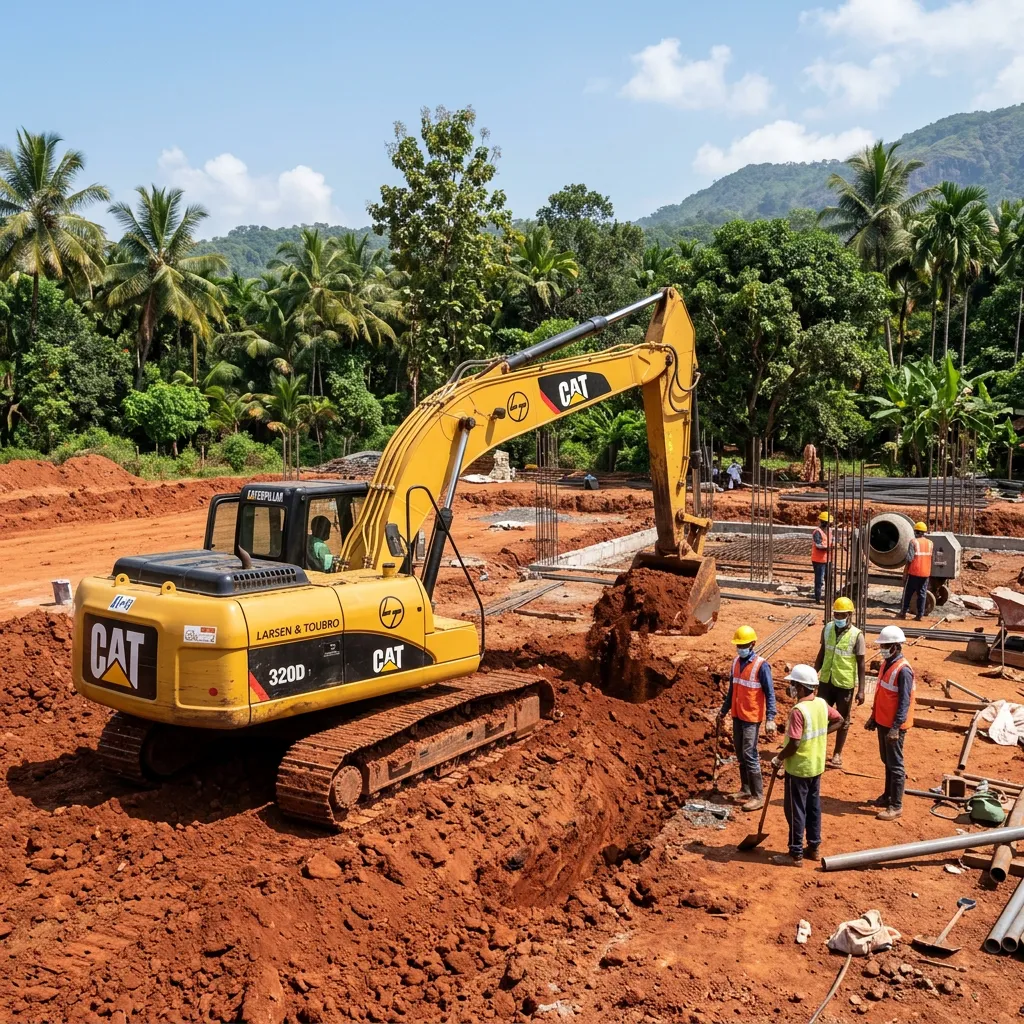
Across Tamil Nadu, black cotton soil is notorious for tearing apart otherwise perfectly engineered PWD roads. This highly expansive clay behaves like a sponge, swelling massively during the monsoon and shrinking violently during the dry season. This constant volumetric change creates immense stress that literally rips asphalt apart from beneath.
1 · The Volumetric Swell-Shrink Destruction Cycle of Clay
Implementing robust standards for the volumetric swell-shrink destruction cycle of clay requires aligning our field crews with standardized geotechnical and engineering procedures.
Expansive clay soils, such as black cotton soil, have low bearing capacity and exhibit large volume changes when wet. To stabilize these soils, we perform lime stabilization. When hydrated lime [Ca(OH)2] is mixed into wet clay, it initiates cation exchange and pozzolanic reactions. Calcium ions replace sodium and potassium ions on clay particle surfaces, causing clay platelets to flocculate into larger aggregates. This reduces the plasticity index, water absorption, and swelling potential of the clay, while increasing its shear strength. We use tractor-mounted rototillers to mix lime into the soil, compact it using sheep's foot rollers, and cure the layer for 7 days before laying subgrade courses. We verify lime content and compaction uniformity using field testing, ensuring soil properties are permanently stabilized. This stabilization method provides a firm base for subgrade structures, extending road pavement service life.
Soil compaction science is the bedrock of durable road and foundation subgrades. At Sri Vari Constructions, our quality control laboratories verify that all soils are compacted at their Optimum Moisture Content (OMC), as determined by the Standard Proctor Test (AASHTO T99 / IS 2720 Part VII). Compaction achieves maximum dry density by expelling air voids, which increases shear strength, reduces permeability, and minimizes future settlement. To monitor moisture levels in real-time, our field technicians utilize calcium carbide speedy moisture meters and cross-check results with overnight oven-drying protocols. When operating soil compactor rollers on the clayey loam soils common around Coimbatore, our operators sequence static, pneumatic, and vibratory passes. A typical sequence begins with static breakdown rolling using smooth-wheel rollers, progresses to heavy vibratory compaction with pad-foot or sheep's foot rollers to break down clay aggregates, and finishes with pneumatic tire rollers to seal the surface against rainwater infiltration. The mechanical energy applied must be adjusted based on soil elasticity. Over-compaction can shear clay platelets, leading to an unwanted loss of cohesive structure and a drop in shear strength, while under-compaction leaves micro-voids that absorb water during the monsoon, causing subgrade softening, clay swelling, and pavement deformation. We strictly target the MoRTH Clause 305 standard of 97% relative compaction for embankments and 100% for subgrade layers.
"Expansive clay soils, such as black cotton soil, have low bearing capacity and exhibit large volume changes when wet."
2 · Geotechnical Replacement Buffer Zones with Moorum Gravel
Under our Coimbatore PWD quality guidelines, executing geotechnical replacement buffer zones with moorum gravel demands rigorous verification of all field metrics and material properties.
Granular Sub-Base (GSB) and subgrade gravel materials are tested to ensure they provide a stable foundation. The primary geotechnical test for structural road bases is the California Bearing Ratio (CBR) test (IS 2720 Part 16). The CBR test measures the resistance of a compacted soil sample to penetration by a standard plunger, compared to a standard crushed rock material. Higher CBR values indicate stiffer, stronger subgrades. MoRTH guidelines specify a minimum CBR of 8% for subgrade soils on major roads. If the native soil exhibits a lower CBR, we must stabilize it with lime or cement, or import high-quality granular subgrade gravel to increase the overall structural capacity of the road pavement. We also perform grain-size distribution and plasticity testing on GSB materials to ensure they provide adequate permeability and drainage, preventing water accumulation within the base course, protecting the pavement structure from subgrade softening.
Soil chemistry plays a vital role in concrete foundation durability. High levels of soluble sulfates and chlorides in groundwater and soil can cause severe concrete deterioration. Sulfates react with hydrated calcium aluminate phases in cement, forming ettringite, which expands and cracks the concrete (sulfate attack). Chlorides penetrate concrete and depassivate reinforcing steel, initiating rapid rebar corrosion. In high-risk zones, such as agricultural fields with heavy fertilizer runoff or industrial areas near Coimbatore, we use Portland Pozzolana Cement (PPC) or Sulfate-Resisting Cement (SRC). We also increase the concrete cover over reinforcing steel and apply waterproofing bituminous coatings to foundation walls to block chemical ingress. We perform chemical testing of soil and groundwater samples prior to construction, determining sulfate concentration (SO3) and chloride content to select the appropriate cement type and concrete mix design, ensuring long-term structural durability under aggressive environmental conditions.
3 · Lime Soil Modification & Chemical Soil Stabilization
To achieve maximum structural stability during the lime soil modification & chemical soil stabilization phase, we enforce strict compliance controls across our regional sites.
Borelog analysis is critical for selecting and designing building and bridge foundations. A standard borelog documents soil strata types, groundwater levels, and Standard Penetration Test (SPT) N-values at regular depth increments. SPT N-values represent the blow count required to drive a split-spoon sampler 300mm into the soil. Higher N-values indicate denser sand or stiffer clay, translating to higher Safe Bearing Capacity (SBC). In the clayey and silty soils of Coimbatore, low N-values (below 10) near the surface warn of soft soils prone to consolidation and settlement. Our engineers analyze these profiles to determine if shallow footings are safe or if we must over-excavate and replace the soil with compacted gravel, utilize raft foundations, or drive concrete piles to reach deeper, stable bearing strata. We also cross-reference borelog data with laboratory tests on undisturbed soil samples, such as direct shear and consolidation tests, to refine our foundation designs and predict settlement characteristics with high accuracy, ensuring structural safety under all design loads.
Effective surface drainage is the single most critical factor in extending the service life of bituminous and concrete roads. Standing water penetrates asphalt, stripping the bitumen binder and creating potholes under traffic loads. We grade roadways with a precise cross-slope camber (typically 2-2.5% for asphalt roads and 1.5-2% for concrete roads) from the center crown to the shoulders. This cross-slope sheds water to concrete side drains. The longitudinal gradient must be kept above 0.3% to prevent water from pooling in side drains. Grade and slope checks are verified using electronic sensors on motor graders and checked manually using line-levels to ensure compliance with NHAI and MoRTH drainage standards. We also design and construct concrete culverts and catch basins at low points to channel runoff away from the roadway. The side drains are lined with stone masonry or precast concrete U-drains to prevent erosion of the shoulder, protecting the structural integrity of the pavement structure from water damage.
| Quality Verification Step | Audit Standard | Tolerance Benchmark / Compliance Target |
|---|---|---|
| Material Receipt Inspections | IS 383 Sieve Analysis | Zero organic contaminations; moisture grading within curves |
| Field Density Compactions | IS 2720 Part 28 Sand replacement | Minimum 98% field dry density versus lab standards |
| Concrete Cube Compressive Checks | IS 516 Compressive strength | Target 28-day crushing load exceeded on all cast cubes |
4 · Subgrade CBR Performance Testing & Bearing verification
A major element of managing subgrade cbr performance testing & bearing verification successfully lies in coordinating logistics, material testing, and machinery runtime.
Accurate earthwork estimation is a primary driver of civil contracting profitability. During the pre-construction survey phase, we calculate excavation (cut) and embankment (fill) volumes. Ideal site development designs achieve an earthworks balance, where the volume of soil excavated matches the volume required for filling low areas and building embankments. When excavations yield poor-quality soil (like highly organic topsoil or expansive black cotton clay), it cannot be used as structural fill. We must factor in the cost of disposing of this spoil and importing graded gravel from approved borrow pits. Our estimators model these variables to ensure tender bids reflect actual transport and disposal costs. We utilize advanced earthwork calculation software to run multiple design iterations, optimizing grading profiles to minimize cut-and-fill imbalances. This analytical approach protects our project budgets and ensures we submit competitive, realistic tenders for public works projects.
Securing public infrastructure contracts from the Tamil Nadu Public Works Department (PWD) requires strict compliance with the Tamil Nadu Transparency in Tenders Act, 1998, and its associated regulations. As a licensed Class-I Civil Contractor, Sri Vari Constructions must regularly demonstrate financial capability, machinery ownership, and a track record of executing complex projects on schedule. Bidding on PWD road and building tenders involves analyzing the Schedule of Rates (SoR) published annually by the department. Because the SoR represents base material and labor rates, contractors must account for regional premium adjustments, fuel price fluctuations, and local supply chain bottlenecks. Our estimating team performs detailed quantity surveys, reviews structural drawings, and models localized risks before submitting bids. We utilize digital tools to calculate margins and structure bid proposals, ensuring compliance with technical eligibility criteria. Strategic bidding models, such as unbalanced pricing of early earthworks and foundation items, are used to maintain positive project cash flows and reduce interest costs on capital equipment financing. Furthermore, we ensure all bids comply with the latest amendments regarding GST, labor cess, and insurance requirements, protecting our margins while delivering value to the state.
5 · PWD Quality Control Audits & Long-Term Road Durability
Ultimately, our site supervisors inspect every phase of pwd quality control audits & long-term road durability to prevent structural settling and secure client sign-off.
PWD projects are subject to strict quality control audits by departmental engineers and third-party testing agencies. Quality audits involve inspecting raw material test certificates, reviewing batch plant logs, and conducting in-situ tests. We maintain a mobile testing laboratory equipped to perform grain-size distribution, liquid limit, plastic limit, and compaction testing directly on-site. All test results are logged in a quality register signed by our QC engineer and the department representative. Maintaining this detailed quality record is a prerequisite for billing approvals, demonstrating our commitment to delivering infrastructure that meets PWD specifications. We also coordinate third-party inspections with independent testing labs, validating our field and laboratory test results. This quality assurance framework ensures that all construction works meet contractual quality standards, facilitating timely payment approvals and project sign-offs.
Maintaining comprehensive quality records is a core requirement for PWD and NHAI project compliance. Our project offices maintain registers for material receipts, concrete pours, compression test results, and level checks. Material delivery tickets, mill certificates, and third-party laboratory reports are filed systematically. These records are reviewed during inspections by departmental engineers, verifying that all materials and construction processes meet project specifications before billing approvals are granted. We also compile as-built surveys, quality logs, and contract documentation, preparing detailed project handbooks for municipal and state agencies. This rigorous drafting procedure supports our Class-I standing, ensuring quality compliance across all public works.
6 · Aggregate Gradations & Sand Blending for Subgrade Stability
Furthermore, daily reporting and quality logging are mandated to maintain complete project visibility and contract compliance.
Successful infrastructure project execution depends heavily on supplier relations and material procurement logistics. Materials like cement, reinforcing steel (TMT bars), and aggregate represent over 60% of project costs. We leverage our Class-I standing to secure bulk pricing and direct mill shipments from primary steel and cement manufacturers. To maintain continuous supply, we establish long-term contracts with regional blue metal crushers and M-sand plants. Structured payment terms, backed by corporate bank guarantees, ensure priority supply during seasonal material shortages. Material haulage is optimized using GPS-tracked dumpers to coordinate dispatch from crushers to the paving site, ensuring that asphalt pavers and concrete batching plants operate continuously without logistical delays. We also maintain on-site material stockpiles to buffer against supply disruptions, and inspect incoming material quality to ensure compliance with project specifications. This coordinated logistical approach minimizes project delays and protects our margins from material price volatility.
Granular Sub-Base (GSB) and subgrade gravel materials are tested to ensure they provide a stable foundation. The primary geotechnical test for structural road bases is the California Bearing Ratio (CBR) test (IS 2720 Part 16). The CBR test measures the resistance of a compacted soil sample to penetration by a standard plunger, compared to a standard crushed rock material. Higher CBR values indicate stiffer, stronger subgrades. MoRTH guidelines specify a minimum CBR of 8% for subgrade soils on major roads. If the native soil exhibits a lower CBR, we must stabilize it with lime or cement, or import high-quality granular subgrade gravel to increase the overall structural capacity of the road pavement. We also perform grain-size distribution and plasticity testing on GSB materials to ensure they provide adequate permeability and drainage, preventing water accumulation within the base course, protecting the pavement structure from subgrade softening.
Operational Summary & Takeaways
This concludes our comprehensive analysis on why black cotton soil ruins pwd roads. At Sri Vari Constructions, we understand that delivering high-performance infrastructure requires a combination of advanced engineering, rigorous quality assurance, and deep local geological knowledge. As a licensed Class-I Civil Contractor serving Coimbatore, Tiruppur, Erode, and the wider Kongu region, we adhere strictly to the latest Ministry of Road Transport and Highways (MoRTH) standards, Tamil Nadu Public Works Department (PWD) specifications, and NHAI quality guidelines. By maintaining a privately owned fleet of over 85 machinery units—including hydraulic excavators, motor graders, and vibratory compactors—and employing experienced site engineers, we ensure that every project we undertake is built to last. Our commitment to daily reporting, strict safety protocols, and robust engineering standards has established us as a trusted partner for public works and private industrial site developments across Tamil Nadu.