
Site Grading & Compaction Contractor in Pollachi
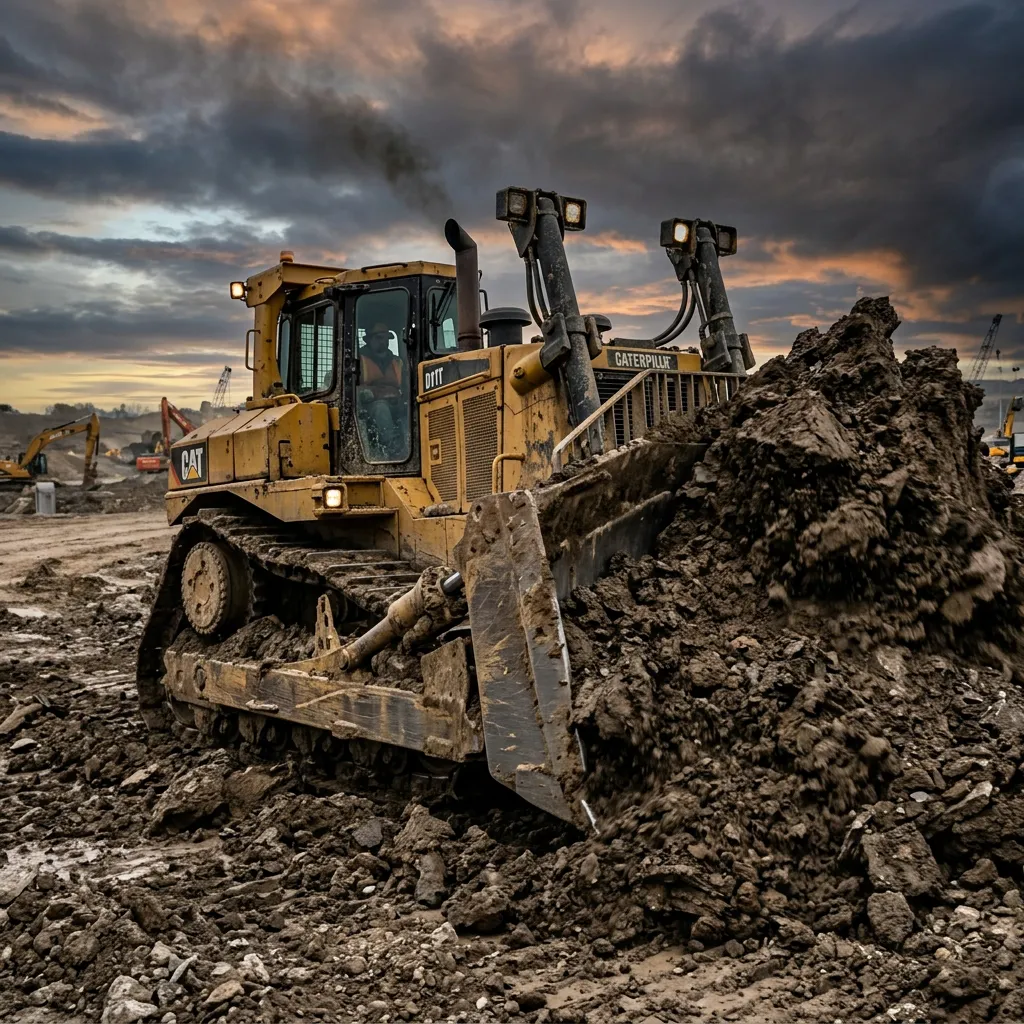
A site grading and compaction contractor in Pollachi has to solve one problem before any other: most plots here were farmland with irregular field bunds, irrigation channels, and natural slope toward the Aliyar and Uppar river systems, so cut-and-fill volumes rarely balance the way a flat-plot layout would suggest. Getting this wrong means either trucking in expensive fill or trucking out excess cut, both of which erode a project's budget fast. This piece covers how we grade and compact converted agricultural plots around Pollachi, from cut-and-fill balancing through the field density testing and documentation a bank or building authority will actually ask for at handover.
1 · Cut-and-Fill Balancing on Pollachi's Undulating Agricultural Plots
Pollachi's plots frequently carry a natural fall of a metre or more across their length, a legacy of flood-irrigation era field grading toward the Aliyar canal network, and the first task on any grading job here is a topographic survey at close grid spacing — typically 10-15 metre intervals — to build an accurate cut-and-fill volume model before any machine moves earth. We run this against the proposed finished-floor level and site drainage gradient specified in the structural and civil drawings, adjusting the target grade slightly where possible to bring cut and fill volumes closer to balance and avoid unnecessary import or export of soil. On several Pollachi plots we've worked, a finished-level adjustment of just 150-200mm has cut haulage requirements by a third or more.
Where a genuine imbalance remains — typically excess cut on the higher end of a sloped plot — we stockpile suitable material on-site for reuse in landscaping or boundary-wall backfill rather than trucking it off immediately, since Pollachi's dispersed plot layouts often mean the nearest approved dumping or borrow site is a meaningful haul distance away. Unsuitable material, including topsoil with high organic content unsuitable for structural fill, is segregated and removed separately. This balancing discipline mirrors the broader rocky-terrain and site-development challenges we've documented in our piece on site development challenges in rocky terrain, though Pollachi's issue is typically volume and slope rather than hardness.
2 · Compaction Roller Sequencing for Clayey vs Sandy Layers
Soil across Pollachi taluk varies from red sandy loam on the higher ground to heavier clayey soil nearer the river flats, and this variation often occurs within a single plot, so we select roller type and pass sequencing per soil layer rather than applying one compaction method across the whole site. For clayey layers, we use sheepsfoot or padfoot rollers that knead the soil and break down clods to achieve density through the full lift thickness, since a smooth-drum roller tends to crust the surface of clay without adequately compacting the material beneath. For sandy or granular layers, smooth-drum vibratory rollers are more effective, using vibration rather than kneading to rearrange particles into a denser configuration.
We compact in lifts not exceeding 200-225mm loose thickness, with each lift's moisture content checked against the soil's optimum moisture content from Standard Proctor testing before rolling begins — soil compacted too dry or too wet of optimum will not reach target density regardless of how many roller passes are applied. On mixed-soil plots we've handled around Pollachi, getting this lift-by-lift discipline right rather than compacting the whole fill in one pass is what separates a subgrade that holds its design bearing capacity from one that settles unevenly within the first monsoon after construction.
"A finished-level adjustment of just 150-200mm has cut haulage requirements by a third or more on several Pollachi plots we've worked."
3 · Field Density Testing (Sand Replacement Method) at Every Lift
We test every compacted lift using the sand replacement method, excavating a small test hole, measuring the volume using calibrated sand of known density, and weighing the extracted soil to calculate in-situ field density against the Standard Proctor maximum dry density established for that soil. Our target is a minimum of 95% relative compaction for general fill and up to 98% under areas that will carry structural foundations or road pavement, consistent with IS 2720 testing methodology and the compaction standards we apply across our subgrade work more broadly, detailed in our piece on subgrade compaction techniques that pass any test.
Testing at every lift rather than only at final grade is deliberate: a lift that fails density testing is far cheaper and faster to re-roll while it's still exposed than to discover after three further lifts have been placed on top of it, at which point remediation means excavating back down through completed work. We log each test's location, depth, moisture content and achieved density on a lift-by-lift compaction record, which becomes part of the handover documentation package for the client's structural engineer or the approving authority.
4 · Retaining Structures for Sites Bordering Irrigation Channels
A meaningful share of Pollachi plots border an irrigation channel, field drain, or the setback zone of a larger canal, and grading a level building pad against this boundary usually requires a retaining structure to hold the new fill level against the lower channel-side grade without encroaching on the waterway's easement. We favour a simple gravity retaining wall in random rubble masonry or plain cement concrete for retained heights up to around 1.5-2 metres, moving to a reinforced cantilever design above that height where the retained soil mass and any surcharge load exceed what an unreinforced gravity section can resist safely.
Every retaining structure bordering an irrigation channel includes weep holes at regular intervals backed by a graded filter or geotextile-wrapped gravel drain, since a wall built without drainage provision will accumulate hydrostatic pressure behind it during the irrigation season or monsoon runoff and is a common cause of retaining wall failure we've been called to remediate on plots we did not originally grade. We also confirm channel setback distances with the local PWD or irrigation department before finalising wall alignment, since encroachment on a notified channel easement can hold up building permit approval regardless of how well the wall itself is built.
5 · Handover Documentation for Bank Loan and Building Permit Approval
Most Pollachi clients need grading and compaction sign-off for two separate purposes — a building permit application to the local planning authority, and a construction-linked bank loan disbursement, which typically requires an engineer's certification that site development work has reached a specified stage. We compile a handover package covering the as-graded topographic survey against approved finished levels, the full lift-by-lift field density testing log, and photographic records of the retaining structures and drainage provisions, all issued under our ISO 9001:2015 quality management certification.
This documentation is prepared in a format we've found banks and municipal engineers in the Pollachi and wider Coimbatore district area accept without requesting supplementary testing, which avoids the delay of a second round of site verification after our crew has already demobilised. We recommend clients raise any specific format requirements from their bank or the local planning office early in the project rather than at handover, since a small change to how test data is presented is trivial to accommodate mid-project but awkward to retrofit after the report is finalised.
Operational Summary & Takeaways
Site grading and compaction in Pollachi requires accurate cut-and-fill balancing on sloped former farmland, soil-appropriate roller sequencing, lift-by-lift density verification, properly drained retaining structures near irrigation channels, and documentation formatted for both bank and permit approval. Sri Vari Constructions holds PWD Class-I licence TN/PWD/CBE/CIV/01/2019 and ISO 9001:2015 quality certification, and serves Pollachi alongside Coimbatore, Tiruppur, Erode, Salem, Karur, Namakkal, Dindigul, the Nilgiris, Mettupalayam, Sulur and Udumalpet. To discuss grading and compaction for your Pollachi plot, see our site development services or reach us through our contact page.