
Concrete mixing best practices for rural projects
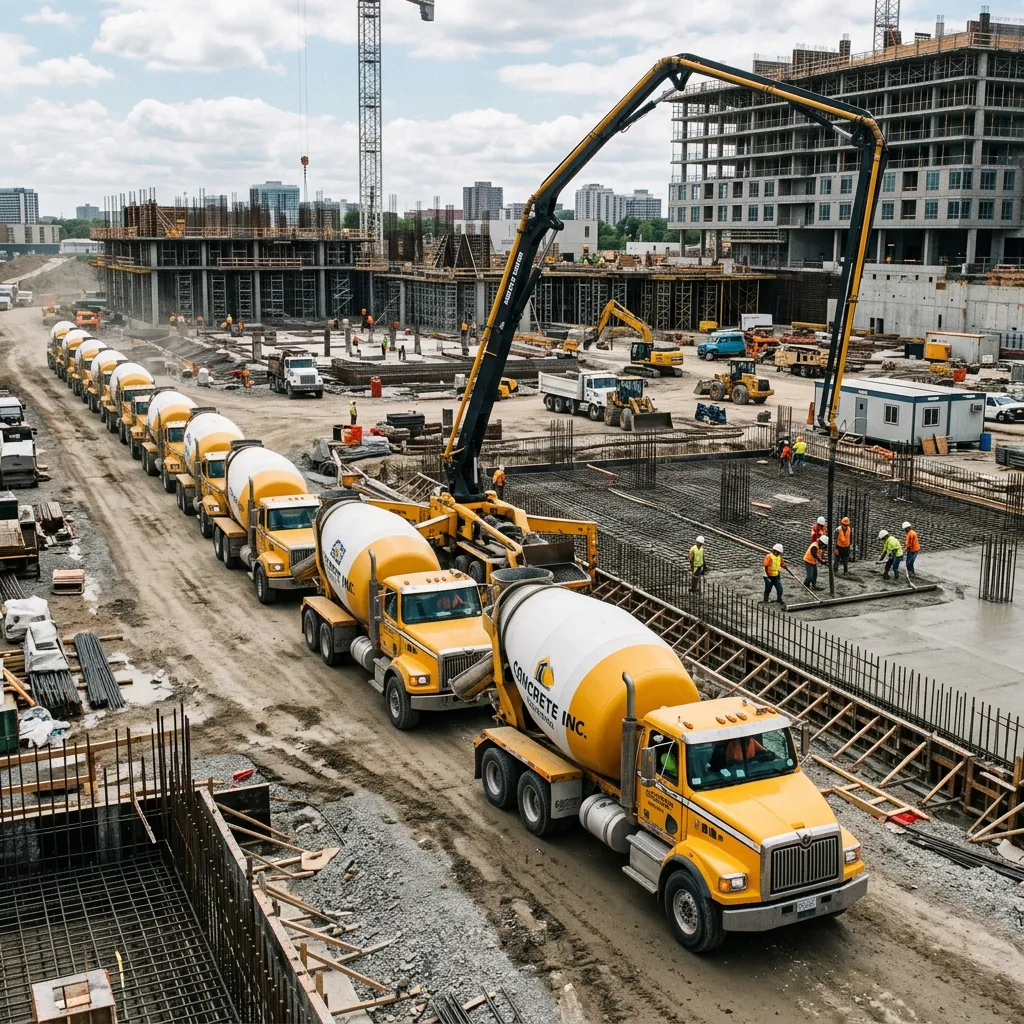
Delivering high-strength concrete to remote rural road sites or PWD building projects across the Kongu region presents significant logistical challenges. Ready-Mix Concrete (RMC) plants are rarely located nearby, meaning site engineers must rely on localized batching and mixing without compromising on quality.
1 · Digital Weight Batching & Skip Calibrations on Remote Sites
Implementing robust standards for digital weight batching & skip calibrations on remote sites requires aligning our field crews with standardized geotechnical and engineering procedures.
Achieving specified concrete compressive strength (M25, M30, or M40 grades) requires strict control of the water-cement ratio, aggregate gradation, and curing conditions. We utilize digital weight-batching plants to measure cement, fine aggregate (M-sand), coarse aggregate (20mm and 12mm blue metal), and water by mass. Fine aggregate gradation is checked using sieve analysis (IS 383) to ensure a stable grading curve. The water-cement ratio is kept at the minimum necessary for hydration and workability, supplemented by superplasticizing admixtures to improve concrete flow without adding excess water. Concrete workability is tested using the slump cone on-site before pouring. During the pour, representative concrete cubes are cast, cured in specialized water tanks on-site, and tested at 7 and 28 days using a calibrated compression testing machine to verify compliance with PWD/NHAI standards. We also monitor concrete temperature during placing, especially in hot weather, to prevent thermal cracking. Proper compaction using needle vibrators is enforced to eliminate air voids and ensure a dense concrete matrix, maximizing durability and structural load capacity.
Hot weather concrete pouring in Tamil Nadu requires managing hydration rates. High temperatures accelerate cement hydration, reducing concrete setting time and workability. To manage this, we mix in retarding plasticizers. These admixtures temporarily delay the initial set of cement, maintaining concrete workability for up to 3 hours. This extended setting window allows concrete transport over longer distances and prevents cold joints in large pours. Admixtures must be dosed precisely; over-dosing can delay setting for days, while under-dosing can lead to rapid slump loss. We monitor concrete setting progress and adjust admixture dosage based on hourly temperature readings, ensuring concrete workability matches placement speeds, protecting structural strength of poured elements.
"Achieving specified concrete compressive strength (M25, M30, or M40 grades) requires strict control of the water-cement ratio, aggregate gradation, and curing conditions."
2 · Water-Cement Ratio Adjustments & Sieve Gradation Analysis
Under our Coimbatore PWD quality guidelines, executing water-cement ratio adjustments & sieve gradation analysis demands rigorous verification of all field metrics and material properties.
Aggregate gradation is the distribution of particle sizes within a batch of crushed stone or sand. We perform regular sieve analysis on fine and coarse aggregates to verify they comply with grading requirements (IS 383). Aggregate blending combines different aggregate fractions (e.g., 20mm, 10mm, and M-sand) to achieve a dense particle packing. A dense packing minimizes the void space between aggregates, reducing the cement paste volume required to fill voids. This increases concrete strength, reduces shrinkage cracking, and improves structural durability, making regular gradation checks essential for quality control. We also test aggregates for properties like flakiness index, elongation index, and water absorption, verifying aggregate quality before concrete mixing. This aggregate quality control ensures the workability and mechanical performance of concrete, maintaining our structural concrete standards.
Coordinating concrete mixer dispatch and placement logistics requires detailed scheduling. Concrete curing begins immediately after mixing; we must transport and pour concrete within 90 minutes of batching (or longer if retarding admixtures are used). Our dispatchers coordinate concrete production at our batching plant with transit mixer travel times and placement speeds on-site. If mixers arrive too quickly, they stand idle, leading to concrete stiffening in the drum; if they arrive too slowly, cold joints can form in the concrete pour. We utilize GPS tracking and mobile coordination to maintain a steady flow of concrete mixers, ensuring a continuous pour. We also plan mixer access paths on-site, ensuring transit trucks can maneuver safely to pump hoppers or dumping chutes. This logistics coordination maximizes placement efficiency and ensures concrete uniformity across the structural pour.
3 · Plasticizing Admixtures & hot weather concrete Transit Extensions
To achieve maximum structural stability during the plasticizing admixtures & hot weather concrete transit extensions phase, we enforce strict compliance controls across our regional sites.
Constructing rural roads under the Pradhan Mantri Gram Sadak Yojana (PMGSY) presents distinct logistical and design challenges. Rural roads are characterized by narrow rights-of-way, sharp horizontal curves, and fragile existing village structures. Large 20-ton multi-axle dumpers cannot traverse narrow village lanes; we utilize smaller 10-ton tippers and compact transit mixers. The design pavement structure typically features a thin bituminous surface dressing over a Granular Sub-Base (GSB) and Water Bound Macadam (WBM) base. We source local gravel and aggregates to minimize transport costs, and establish bypasses and culverts to protect village irrigation channels, ensuring minimal disruption to rural agriculture during construction. We also coordinate with local panchayats to manage land access and coordinate construction schedules around planting and harvesting seasons. This social coordination is supported by quality control testing to verify that rural roads meet PMGSY standards for durability and road safety.
PWD projects are subject to strict quality control audits by departmental engineers and third-party testing agencies. Quality audits involve inspecting raw material test certificates, reviewing batch plant logs, and conducting in-situ tests. We maintain a mobile testing laboratory equipped to perform grain-size distribution, liquid limit, plastic limit, and compaction testing directly on-site. All test results are logged in a quality register signed by our QC engineer and the department representative. Maintaining this detailed quality record is a prerequisite for billing approvals, demonstrating our commitment to delivering infrastructure that meets PWD specifications. We also coordinate third-party inspections with independent testing labs, validating our field and laboratory test results. This quality assurance framework ensures that all construction works meet contractual quality standards, facilitating timely payment approvals and project sign-offs.
| Quality Verification Step | Audit Standard | Tolerance Benchmark / Compliance Target |
|---|---|---|
| Material Receipt Inspections | IS 383 Sieve Analysis | Zero organic contaminations; moisture grading within curves |
| Field Density Compactions | IS 2720 Part 28 Sand replacement | Minimum 98% field dry density versus lab standards |
| Concrete Cube Compressive Checks | IS 516 Compressive strength | Target 28-day crushing load exceeded on all cast cubes |
4 · Mix Dispatch Logistics, Mixer Routing & Placement Coordination
A major element of managing mix dispatch logistics, mixer routing & placement coordination successfully lies in coordinating logistics, material testing, and machinery runtime.
Maintaining comprehensive quality records is a core requirement for PWD and NHAI project compliance. Our project offices maintain registers for material receipts, concrete pours, compression test results, and level checks. Material delivery tickets, mill certificates, and third-party laboratory reports are filed systematically. These records are reviewed during inspections by departmental engineers, verifying that all materials and construction processes meet project specifications before billing approvals are granted. We also compile as-built surveys, quality logs, and contract documentation, preparing detailed project handbooks for municipal and state agencies. This rigorous drafting procedure supports our Class-I standing, ensuring quality compliance across all public works.
Successful infrastructure project execution depends heavily on supplier relations and material procurement logistics. Materials like cement, reinforcing steel (TMT bars), and aggregate represent over 60% of project costs. We leverage our Class-I standing to secure bulk pricing and direct mill shipments from primary steel and cement manufacturers. To maintain continuous supply, we establish long-term contracts with regional blue metal crushers and M-sand plants. Structured payment terms, backed by corporate bank guarantees, ensure priority supply during seasonal material shortages. Material haulage is optimized using GPS-tracked dumpers to coordinate dispatch from crushers to the paving site, ensuring that asphalt pavers and concrete batching plants operate continuously without logistical delays. We also maintain on-site material stockpiles to buffer against supply disruptions, and inspect incoming material quality to ensure compliance with project specifications. This coordinated logistical approach minimizes project delays and protects our margins from material price volatility.
5 · Cylinder Compressive Strength Testing & PWD Field verification
Ultimately, our site supervisors inspect every phase of cylinder compressive strength testing & pwd field verification to prevent structural settling and secure client sign-off.
Soil chemistry plays a vital role in concrete foundation durability. High levels of soluble sulfates and chlorides in groundwater and soil can cause severe concrete deterioration. Sulfates react with hydrated calcium aluminate phases in cement, forming ettringite, which expands and cracks the concrete (sulfate attack). Chlorides penetrate concrete and depassivate reinforcing steel, initiating rapid rebar corrosion. In high-risk zones, such as agricultural fields with heavy fertilizer runoff or industrial areas near Coimbatore, we use Portland Pozzolana Cement (PPC) or Sulfate-Resisting Cement (SRC). We also increase the concrete cover over reinforcing steel and apply waterproofing bituminous coatings to foundation walls to block chemical ingress. We perform chemical testing of soil and groundwater samples prior to construction, determining sulfate concentration (SO3) and chloride content to select the appropriate cement type and concrete mix design, ensuring long-term structural durability under aggressive environmental conditions.
Heavy construction machinery uptime is critical to meeting tight project timelines. Our fleet, including excavators, motor graders, soil compactors, and transit mixers, undergoes rigorous preventive maintenance. Soil and dust from excavation sites accelerate wear on track chains, pins, and rollers; we enforce daily undercarriage washdowns. Hydraulic systems are checked for pressure drops and water ingress, which can damage hydraulic pumps. Engine oil, filters, and air intake systems are serviced at designated running hour intervals (typically every 250 hours). By maintaining comprehensive service logs and stocking critical spares at our Coimbatore yard, we minimize on-site breakdowns and maintain high operational efficiency. We also train our operators to perform daily pre-start checks, monitoring coolant levels, hydraulic hoses, and warning indicators. This proactive maintenance culture ensures machinery availability and enhances site safety by preventing equipment failures during critical operations.
6 · Morning Toolbox Talks & Mixing Drum Cleaning Schedules
Furthermore, daily reporting and quality logging are mandated to maintain complete project visibility and contract compliance.
Enforcing safety protocols on busy construction sites requires ongoing worker training. We conduct mandatory 15-minute toolbox talks every morning for all site personnel. These talks cover specific safety topics, such as correct use of Personal Protective Equipment (PPE), trench safety, safe lifting techniques, and crane operations. Site supervisors conduct daily safety walks to identify hazards like loose electrical cables, missing handrails, or unsafe ladders. By engaging workers directly in safety discussions and enforcing a zero-tolerance policy for safety violations, we foster a proactive safety culture. We also document safety audits and report near-misses, utilizing safety logs to improve site safety rules. This worker training and safety tracking system protects our field crew, achieving a zero-accident safety record across our construction projects.
Achieving specified concrete compressive strength (M25, M30, or M40 grades) requires strict control of the water-cement ratio, aggregate gradation, and curing conditions. We utilize digital weight-batching plants to measure cement, fine aggregate (M-sand), coarse aggregate (20mm and 12mm blue metal), and water by mass. Fine aggregate gradation is checked using sieve analysis (IS 383) to ensure a stable grading curve. The water-cement ratio is kept at the minimum necessary for hydration and workability, supplemented by superplasticizing admixtures to improve concrete flow without adding excess water. Concrete workability is tested using the slump cone on-site before pouring. During the pour, representative concrete cubes are cast, cured in specialized water tanks on-site, and tested at 7 and 28 days using a calibrated compression testing machine to verify compliance with PWD/NHAI standards. We also monitor concrete temperature during placing, especially in hot weather, to prevent thermal cracking. Proper compaction using needle vibrators is enforced to eliminate air voids and ensure a dense concrete matrix, maximizing durability and structural load capacity.
Operational Summary & Takeaways
This concludes our comprehensive analysis on concrete mixing best practices for rural projects. At Sri Vari Constructions, we understand that delivering high-performance infrastructure requires a combination of advanced engineering, rigorous quality assurance, and deep local geological knowledge. As a licensed Class-I Civil Contractor serving Coimbatore, Tiruppur, Erode, and the wider Kongu region, we adhere strictly to the latest Ministry of Road Transport and Highways (MoRTH) standards, Tamil Nadu Public Works Department (PWD) specifications, and NHAI quality guidelines. By maintaining a privately owned fleet of over 85 machinery units—including hydraulic excavators, motor graders, and vibratory compactors—and employing experienced site engineers, we ensure that every project we undertake is built to last. Our commitment to daily reporting, strict safety protocols, and robust engineering standards has established us as a trusted partner for public works and private industrial site developments across Tamil Nadu.