
Monsoon SOP · keep the site open
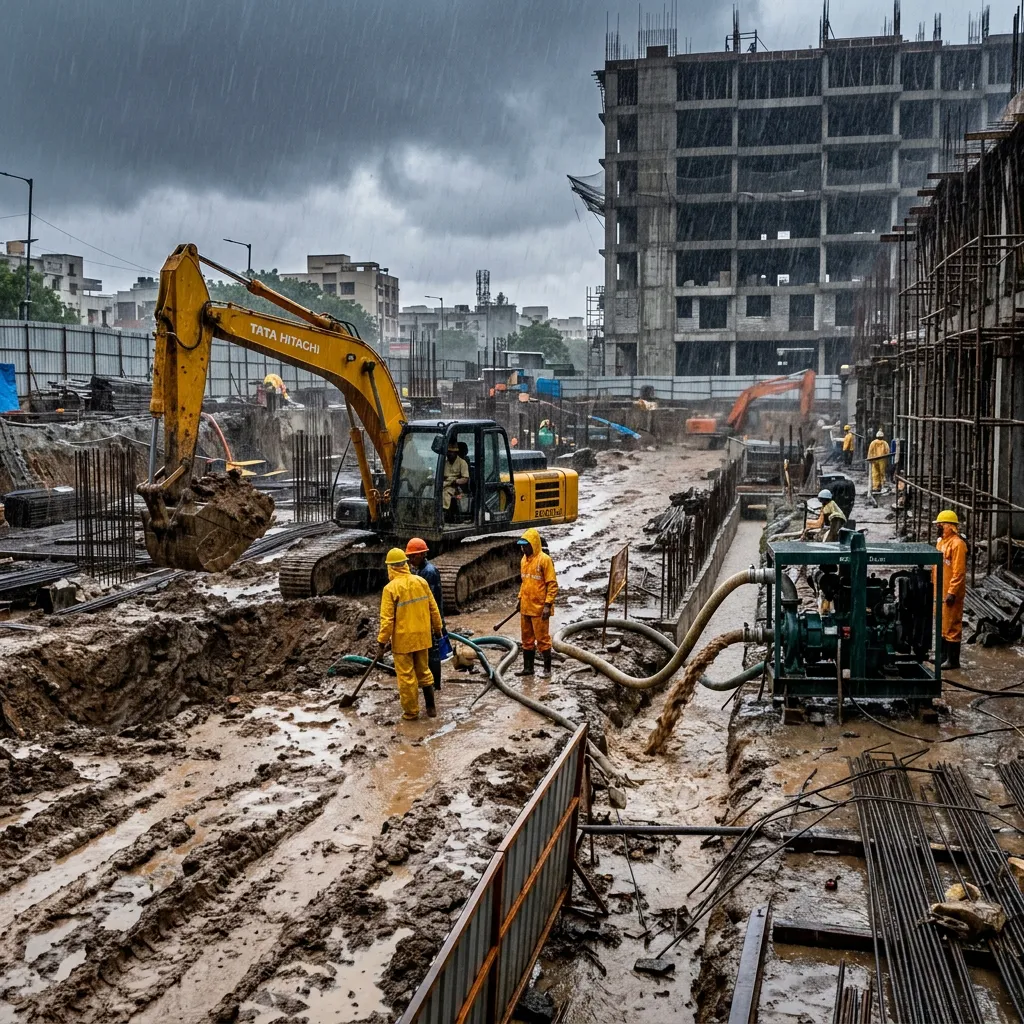
The monsoon season in the Kongu belt doesn't respect project deadlines. For contractors, the difference between profitability and massive losses lies in a rigorous Standard Operating Procedure (SOP) tailored for torrential rains. It's not just about covering materials with tarpaulins; it's about anticipating the flow of surface water before the first drop hits the ground.
1 · Proactive Water Management & Dewatering Protocols
Implementing robust standards for proactive water management & dewatering protocols requires aligning our field crews with standardized geotechnical and engineering procedures.
The monsoon seasons in the Kongu region require specialized site-management protocols to keep active construction sites open and safe. Rainwater runoff can quickly saturate subgrades, liquefy open trenches, and wash away unconsolidated gravel bases. Our Standard Operating Procedure (SOP) mandates installing perimeter drainage ditches and soil berms to divert external surface water away from excavation zones. High-capacity diesel trash pumps are staged at low points to handle immediate dewatering. Sensitive materials, such as cement bags and structural steel, are stored in elevated, weather-proof sheds. Heavily trafficked haul roads are stabilized using coarse stone aggregates and geotextile membranes to prevent dump trucks and excavators from bogging down in deep clay mud, ensuring continuous site operations. We also conduct daily safety audits of trench walls, soil stockpiles, and electrical setups to mitigate hazards related to heavy rains. Our operators are trained to secure heavy machinery on firm, elevated ground during downpours, preventing equipment damage and maintaining readiness to resume operations immediately after the rain breaks.
Deploying and managing dewatering pump logistics is critical during heavy storm events. We maintain a fleet of diesel-powered self-priming centrifugal pumps and electric submersible pumps ranging from 5 HP to 25 HP. During emergency dewatering, pumps must operate continuously; we establish dedicated on-site fuel stations and deploy maintenance technicians on 12-hour shifts to monitor engine oil, clean intake strainers, and repair suction hoses. Water discharged from excavations often contains suspended silt and sand; to prevent local municipal drainage blockages, we pass the pumped water through temporary silt settlement basins before discharging it into natural channels. We also coordinate with local municipal authorities to ensure discharge paths have adequate capacity, avoiding flooding of adjacent areas. This systematic pump management prevents structural damage to open excavations and ensures safe working conditions during severe weather.
"The monsoon seasons in the Kongu region require specialized site-management protocols to keep active construction sites open and safe."
2 · Wet-Weather Heavy Equipment Maintenance Standards
Under our Coimbatore PWD quality guidelines, executing wet-weather heavy equipment maintenance standards demands rigorous verification of all field metrics and material properties.
Excavations deeper than 1.5 meters present significant soil cave-in hazards, especially in the variable soil profiles of Coimbatore. To protect workers in deep trenches, Sri Vari Constructions enforces rigid shoring and protective system protocols. We utilize structural MS trench boxes, timber shoring, and sheet piling depending on soil classification (Type A, B, or C). Spoil piles of excavated earth are strictly placed at least 1.5 meters from the trench edge to prevent slides. Daily inspections are conducted by a designated safety officer to check for tension cracks, water seepage, or bulging walls. Safe access is maintained using heavy-duty aluminum ladders placed every 15 meters along the excavation, extending at least 1 meter above the surface to ensure secure egress. Workers are equipped with safety harnesses, helmets, and high-visibility jackets. We also conduct gas testing in deep trenches where organic matter might generate toxic gases, ensuring a safe working environment. These safety measures are supported by regular toolbox talks and emergency drills, ensuring that our field crew is prepared to handle any excavation hazard proactively.
Trench shoring shields (trench boxes) are engineered to protect workers in excavations subject to soil movement. Unlike active shoring, which applies lateral pressure to trench walls, a trench shield provides a protective barrier. The shield is placed inside the excavation, and workers operate within its steel walls. The space between the shield and the excavation walls is backfilled to prevent soil movement from shifting the shield. As excavation progresses, the shield is pulled forward using an excavator, providing continuous protection during utility pipeline installation. We verify trench box capacity against soil lateral pressure calculations, ensuring the steel walls can resist potential soil collapses. This protective system allows our crews to install utility lines safely and efficiently in unstable or deep trench conditions.
3 · Essential Material Stockpiling & Storage Controls
To achieve maximum structural stability during the essential material stockpiling & storage controls phase, we enforce strict compliance controls across our regional sites.
Heavy construction machinery uptime is critical to meeting tight project timelines. Our fleet, including excavators, motor graders, soil compactors, and transit mixers, undergoes rigorous preventive maintenance. Soil and dust from excavation sites accelerate wear on track chains, pins, and rollers; we enforce daily undercarriage washdowns. Hydraulic systems are checked for pressure drops and water ingress, which can damage hydraulic pumps. Engine oil, filters, and air intake systems are serviced at designated running hour intervals (typically every 250 hours). By maintaining comprehensive service logs and stocking critical spares at our Coimbatore yard, we minimize on-site breakdowns and maintain high operational efficiency. We also train our operators to perform daily pre-start checks, monitoring coolant levels, hydraulic hoses, and warning indicators. This proactive maintenance culture ensures machinery availability and enhances site safety by preventing equipment failures during critical operations.
Managing dump truck dispatch logistics is essential for large-scale earthwork and paving projects. We operate a fleet of 10-ton and 20-ton tippers, coordinated using a central logistics platform. GPS tracking provides real-time visibility into truck positions, travel speeds, and cycle times. We analyze this data to identify bottlenecks at loading quarries or site dumping zones. By adjusting dispatch intervals and rerouting trucks around traffic, we maintain a steady flow of materials to the paving site, maximizing machinery utilization and minimizing project timelines. We also monitor fuel efficiency and driver shift compliance, using fleet diagnostics to manage operating costs. This logistical control ensures aggregate deliveries align with paving rates, maximizing highway paving efficiency.
| Quality Verification Step | Audit Standard | Tolerance Benchmark / Compliance Target |
|---|---|---|
| Material Receipt Inspections | IS 383 Sieve Analysis | Zero organic contaminations; moisture grading within curves |
| Field Density Compactions | IS 2720 Part 28 Sand replacement | Minimum 98% field dry density versus lab standards |
| Concrete Cube Compressive Checks | IS 516 Compressive strength | Target 28-day crushing load exceeded on all cast cubes |
4 · Soil Excavation Protection & Structural Shoring
A major element of managing soil excavation protection & structural shoring successfully lies in coordinating logistics, material testing, and machinery runtime.
PWD projects are subject to strict quality control audits by departmental engineers and third-party testing agencies. Quality audits involve inspecting raw material test certificates, reviewing batch plant logs, and conducting in-situ tests. We maintain a mobile testing laboratory equipped to perform grain-size distribution, liquid limit, plastic limit, and compaction testing directly on-site. All test results are logged in a quality register signed by our QC engineer and the department representative. Maintaining this detailed quality record is a prerequisite for billing approvals, demonstrating our commitment to delivering infrastructure that meets PWD specifications. We also coordinate third-party inspections with independent testing labs, validating our field and laboratory test results. This quality assurance framework ensures that all construction works meet contractual quality standards, facilitating timely payment approvals and project sign-offs.
Maintaining comprehensive quality records is a core requirement for PWD and NHAI project compliance. Our project offices maintain registers for material receipts, concrete pours, compression test results, and level checks. Material delivery tickets, mill certificates, and third-party laboratory reports are filed systematically. These records are reviewed during inspections by departmental engineers, verifying that all materials and construction processes meet project specifications before billing approvals are granted. We also compile as-built surveys, quality logs, and contract documentation, preparing detailed project handbooks for municipal and state agencies. This rigorous drafting procedure supports our Class-I standing, ensuring quality compliance across all public works.
5 · PWD Quality Assurance & Drainage Design Parameters
Ultimately, our site supervisors inspect every phase of pwd quality assurance & drainage design parameters to prevent structural settling and secure client sign-off.
Soil compaction science is the bedrock of durable road and foundation subgrades. At Sri Vari Constructions, our quality control laboratories verify that all soils are compacted at their Optimum Moisture Content (OMC), as determined by the Standard Proctor Test (AASHTO T99 / IS 2720 Part VII). Compaction achieves maximum dry density by expelling air voids, which increases shear strength, reduces permeability, and minimizes future settlement. To monitor moisture levels in real-time, our field technicians utilize calcium carbide speedy moisture meters and cross-check results with overnight oven-drying protocols. When operating soil compactor rollers on the clayey loam soils common around Coimbatore, our operators sequence static, pneumatic, and vibratory passes. A typical sequence begins with static breakdown rolling using smooth-wheel rollers, progresses to heavy vibratory compaction with pad-foot or sheep's foot rollers to break down clay aggregates, and finishes with pneumatic tire rollers to seal the surface against rainwater infiltration. The mechanical energy applied must be adjusted based on soil elasticity. Over-compaction can shear clay platelets, leading to an unwanted loss of cohesive structure and a drop in shear strength, while under-compaction leaves micro-voids that absorb water during the monsoon, causing subgrade softening, clay swelling, and pavement deformation. We strictly target the MoRTH Clause 305 standard of 97% relative compaction for embankments and 100% for subgrade layers.
Effective surface drainage is the single most critical factor in extending the service life of bituminous and concrete roads. Standing water penetrates asphalt, stripping the bitumen binder and creating potholes under traffic loads. We grade roadways with a precise cross-slope camber (typically 2-2.5% for asphalt roads and 1.5-2% for concrete roads) from the center crown to the shoulders. This cross-slope sheds water to concrete side drains. The longitudinal gradient must be kept above 0.3% to prevent water from pooling in side drains. Grade and slope checks are verified using electronic sensors on motor graders and checked manually using line-levels to ensure compliance with NHAI and MoRTH drainage standards. We also design and construct concrete culverts and catch basins at low points to channel runoff away from the roadway. The side drains are lined with stone masonry or precast concrete U-drains to prevent erosion of the shoulder, protecting the structural integrity of the pavement structure from water damage.
6 · Worker Safety Orientations & Storm Response Operations
Furthermore, daily reporting and quality logging are mandated to maintain complete project visibility and contract compliance.
Consistent, transparent client communication is essential for running successful civil contracts. Under our internal 6 AM communication rule, project managers send a daily summary to client representatives every morning. This WhatsApp or email update includes work completed the previous day, target tasks for the current day, material delivery schedules, and machinery deployments. Providing this real-time progress data eliminates the client's need to chase site engineers for updates. It keeps clients aligned on project milestones and allows for rapid decision-making regarding unforeseen field adjustments, building collaborative project management dynamics. We also share weekly progress photos, quality test reports, and schedule updates, ensuring that all stakeholders remain informed and aligned. This transparency minimizes disputes, accelerates progress approvals, and strengthens our long-term client relationships.
Enforcing safety protocols on busy construction sites requires ongoing worker training. We conduct mandatory 15-minute toolbox talks every morning for all site personnel. These talks cover specific safety topics, such as correct use of Personal Protective Equipment (PPE), trench safety, safe lifting techniques, and crane operations. Site supervisors conduct daily safety walks to identify hazards like loose electrical cables, missing handrails, or unsafe ladders. By engaging workers directly in safety discussions and enforcing a zero-tolerance policy for safety violations, we foster a proactive safety culture. We also document safety audits and report near-misses, utilizing safety logs to improve site safety rules. This worker training and safety tracking system protects our field crew, achieving a zero-accident safety record across our construction projects.
Operational Summary & Takeaways
This concludes our comprehensive analysis on monsoon sop. At Sri Vari Constructions, we understand that delivering high-performance infrastructure requires a combination of advanced engineering, rigorous quality assurance, and deep local geological knowledge. As a licensed Class-I Civil Contractor serving Coimbatore, Tiruppur, Erode, and the wider Kongu region, we adhere strictly to the latest Ministry of Road Transport and Highways (MoRTH) standards, Tamil Nadu Public Works Department (PWD) specifications, and NHAI quality guidelines. By maintaining a privately owned fleet of over 85 machinery units—including hydraulic excavators, motor graders, and vibratory compactors—and employing experienced site engineers, we ensure that every project we undertake is built to last. Our commitment to daily reporting, strict safety protocols, and robust engineering standards has established us as a trusted partner for public works and private industrial site developments across Tamil Nadu.